
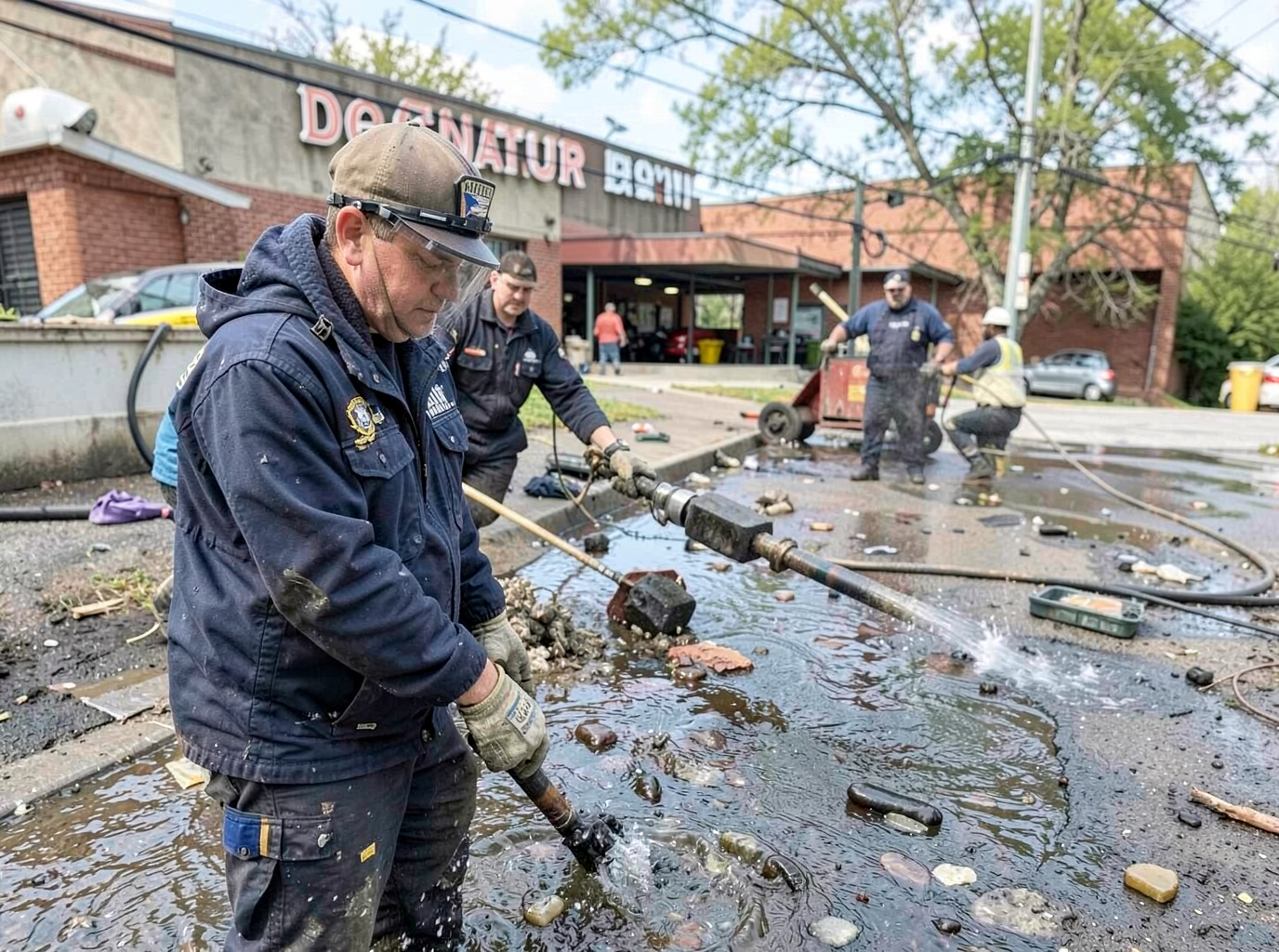
Commercial properties in Decatur often sit on older foundations in neighborhoods like Old Decatur and Albany where clay-heavy soils and aging cast-iron lines create slow leaks that go unnoticed until water reaches finished floors. Hot humid summers accelerate mold growth on carpet pads and drywall within 48 hours, so extraction must pull standing water and then force dry wall cavities and subfloors before moisture migrates into adjacent tenant spaces. Crews stage equipment through rear loading doors or service corridors to keep front-of-house operations running when possible.
Point Mallard and Beltline commercial sites sit closer to Wheeler Lake and the Tennessee River floodplain, so heavy spring rains or river rise can push water under slab-on-grade retail and warehouse buildings. In these cases extraction focuses on removing water from under vinyl composition tile and through expansion joints before it wicks up metal shelving bases. Technicians use moisture meters on concrete to confirm readings below 12 percent before allowing restocking, because residual moisture trapped under impermeable flooring leads to recurring odor complaints from neighboring units.
Morgan County code requires proper disposal of extracted wastewater when it contains cleaning chemicals or sewage, so crews route discharge through approved sanitary connections rather than storm drains. This step adds time on restaurant and medical-office jobs near Decatur Morgan Hospital where health-department inspections follow any water event. Documenting moisture readings at each visit protects both the business owner and the property manager when insurance adjusters review the claim.
Technician insight
In Decatur the thing that catches most people out with commercial water cleanup is how quickly summer humidity turns a small leak under older Albany retail floors into widespread mold on particleboard shelving bases within 36 hours.
Riverbend Retail Leak
A roof drain backed up during a summer storm and sent water under vinyl tile in a Riverbend storefront. We extracted standing water, pulled baseboards, and ran drying equipment for four days until concrete readings dropped below 12 percent. The store reopened without mold issues or insurance disputes.
Commercial Water Cleanup Services We Offer
✓Office Building Water Extraction
Rapid removal of standing water from cubicles, server rooms and common areas followed by targeted drying of carpet tiles and wall bases to keep businesses operational.
✓Retail Space Flood Cleanup
Extraction under display fixtures and through stockrooms in stores along Beltline and in Point Mallard, with care taken to protect merchandise and flooring from humidity damage.
✓Restaurant Kitchen Water Removal
Cleanup of grease-laden water from tile floors, under equipment and into floor drains, followed by sanitizing and drying to meet health-department reopening standards.
✓Warehouse and Storage Unit Drying
Large-scale extraction and dehumidification in industrial buildings near the river where high ceilings and concrete slabs trap moisture after heavy rains.
✓Medical Office Water Mitigation
Controlled extraction and documentation in clinics and offices near Decatur Morgan Hospital, preserving patient records and meeting strict infection-control protocols.
Commercial Water Cleanup Cost in Decatur, AL
| Service | Typical Range | What Affects It |
|---|---|---|
| Small retail or office extraction | $1,200–$2,800 | Single room or limited footprint; price rises with carpet removal and wall drying |
| Restaurant kitchen cleanup | $2,400–$4,500 | Grease water and equipment moving increase labor |
| Warehouse slab drying | $3,500–$7,000 | Large open areas and concrete moisture readings drive equipment count |
| After-hours or weekend response | Add 25–40% | Holiday or late-night calls common during summer storms |
Ranges are typical for Decatur, AL and confirmed with an exact written quote before any work starts.
How it works
- 1
On-Site Assessment
Technician inspects the source, maps affected zones with moisture meters, and notes building construction details common to Decatur commercial stock.
- 2
Water Extraction
Truck-mounted and portable pumps remove standing water from floors, under fixtures and through slab joints before humidity drives it into walls.
- 3
Structural Drying
Air movers and dehumidifiers are placed to pull moisture from carpet, drywall and concrete while monitoring daily readings.
- 4
Final Verification
Return visits confirm moisture levels meet industry standards and the space is ready for repairs or reopening.
Pricing
Commercial jobs are quoted after inspection because square footage, water category and access constraints vary widely.